Establishing an experience-led optimization strategy
Embedding UX and conversion optimization as a way of working
Client
Simyo
Services
Product Design
Summary
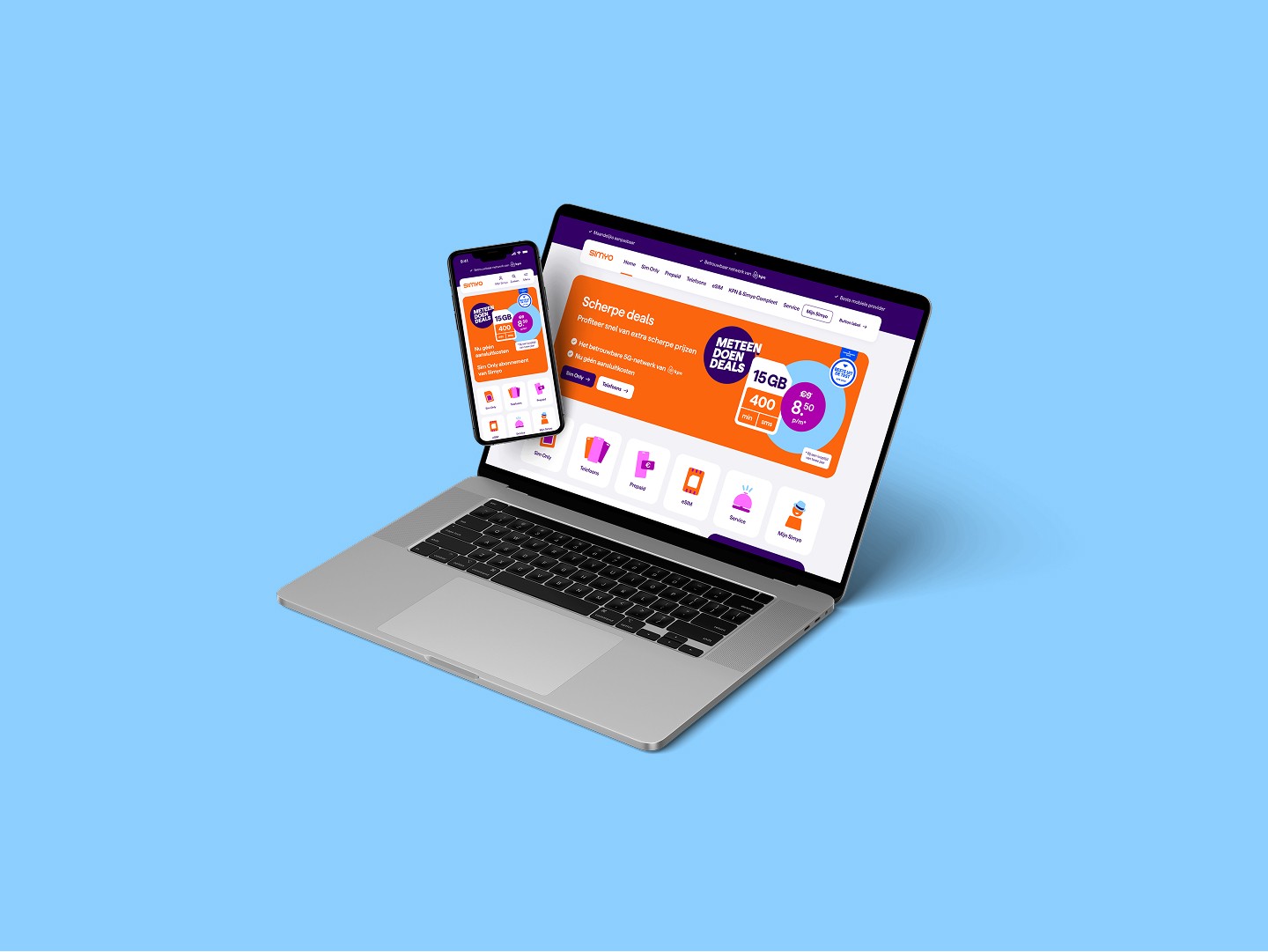
Simyo is a Dutch mobile provider and part of KPN, operating in a competitive market where the difference between a customer signing up or walking away often comes down to small details in the experience. The challenge was not a single project with a clear endpoint. It was a long-term question: how do you build a way of working that consistently finds those details, improves them, and keeps improving them over time?
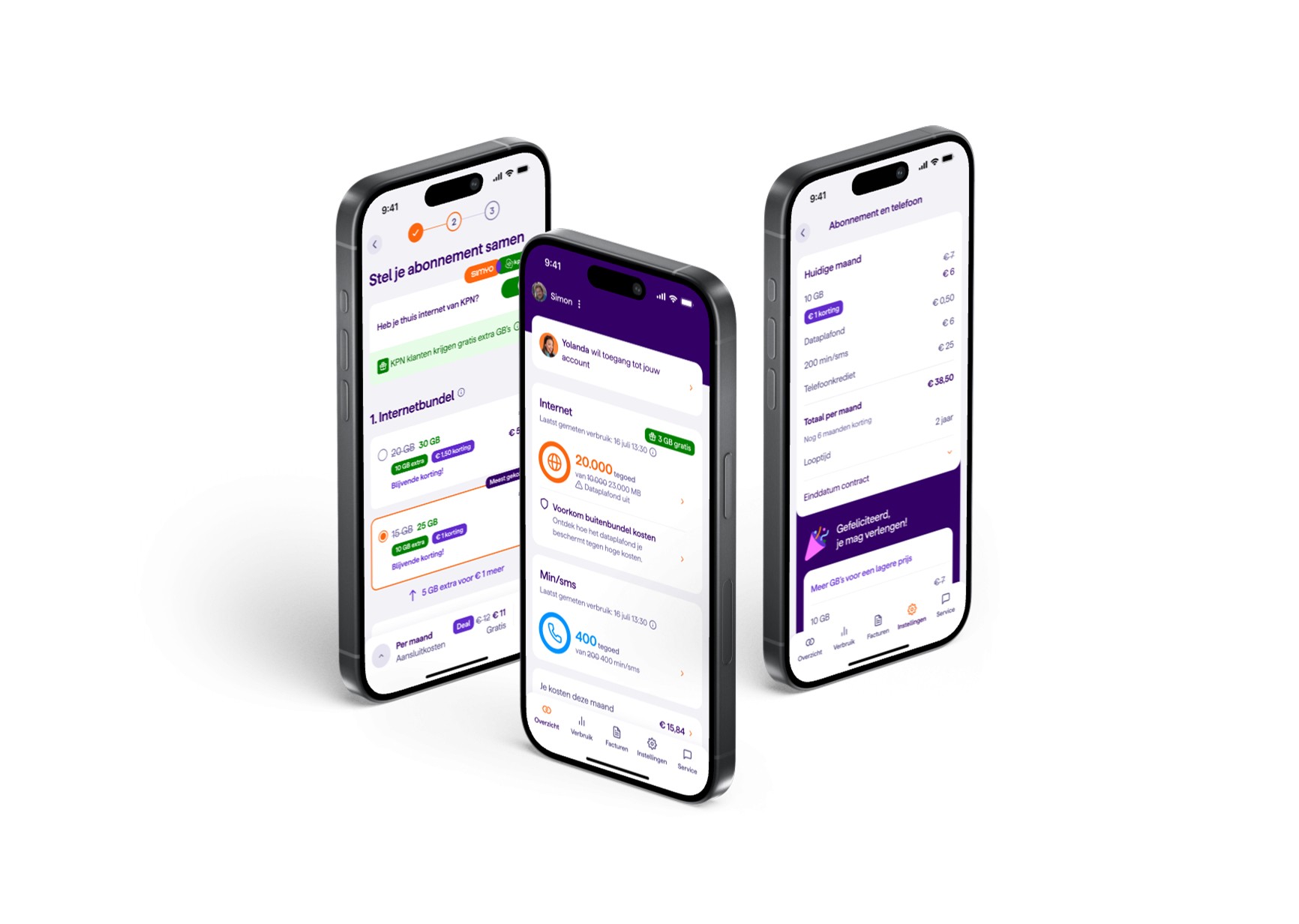
As a long-term freelance UX designer, the work was not just about designing better screens. Working alongside a CRO expert, the core task was to set up a mature, evidence-based optimization practice from the ground up, spanning both the public website and the customer portal, and covering everything from conversion and navigation to retention and customer service reduction. That meant putting the right process in place, building organizational alignment around it, and making sure that improvements proven in testing actually made it into the product.

Challenge
Telcos are not simple products. Behind a relatively clean consumer-facing interface sits a dense landscape of pricing, propositions, account management, and service flows, each with its own logic and its own potential for friction. At Simyo, the experience across the public website and customer portal had room for meaningful improvement in multiple areas at once, but without a structured way to prioritize, test, and validate changes, improvement efforts risked being scattered, inconsistent, and hard to sustain.
The deeper challenge was organizational as much as it was design-related. For continuous optimization to work, it cannot live with one person or one team. It needs to be understood and supported across the business, from the analysts tracking what is happening on the site, to the customer service team seeing where people get stuck, to the developers and designers responsible for building and maintaining the product. Without that shared investment, even well-designed improvements struggle to land.
The goal was therefore not just to make Simyo's digital experience better. It was to build a practice that Simyo could rely on to keep making it better, long after any individual engagement ended.

Approach
The work started with establishing the foundations of a repeatable process. Together with a CRO expert, a structured workflow was put in place that connected the different sources of insight available across the organization: quantitative data from the analyst team, qualitative signals from the customer service team, and ideas and observations collected from people across the business. Rather than working from assumptions, every optimization effort started from evidence of where the experience was falling short and why.
From that ongoing stream of insight, creative sessions were run to generate and evaluate ideas, selecting the strongest opportunities to build into a prioritized backlog. The work was organized thematically, moving across different areas of the experience in a structured way: pricing and proposition clarity, checkout and onboarding processes, navigation and search, and retention and churn reduction. Wherever there was a meaningful gap between what the product was doing and what users needed, that gap became a candidate for improvement.
Designing against a backlog is one thing. Getting the whole organization behind the work is another. To make sure that experimentation was not happening in a silo, results were shared openly and regularly. Tests in progress were presented before going live, and completed experiments were discussed in periodic sessions that anyone in the organization could join. That transparency created shared understanding of what was being worked on and why, and it turned optimization from a specialist activity into something the whole business felt connected to.

One of the less visible but most important parts of the role was making sure that validated improvements actually made it into the product. A well-run experiment that never gets implemented is wasted effort. Getting proven solutions absorbed into the design system and through the development pipeline required consistent, careful alignment with the design and development team, making sure that nothing fell through the cracks between insight and implementation.
Throughout all of this, the work was guided by two lenses held simultaneously: UX and service design on one side, and conversion and business performance on the other. Improvements had to be good for users and viable for the business. That dual focus shaped every decision, from how ideas were selected to how results were evaluated.
Outcome
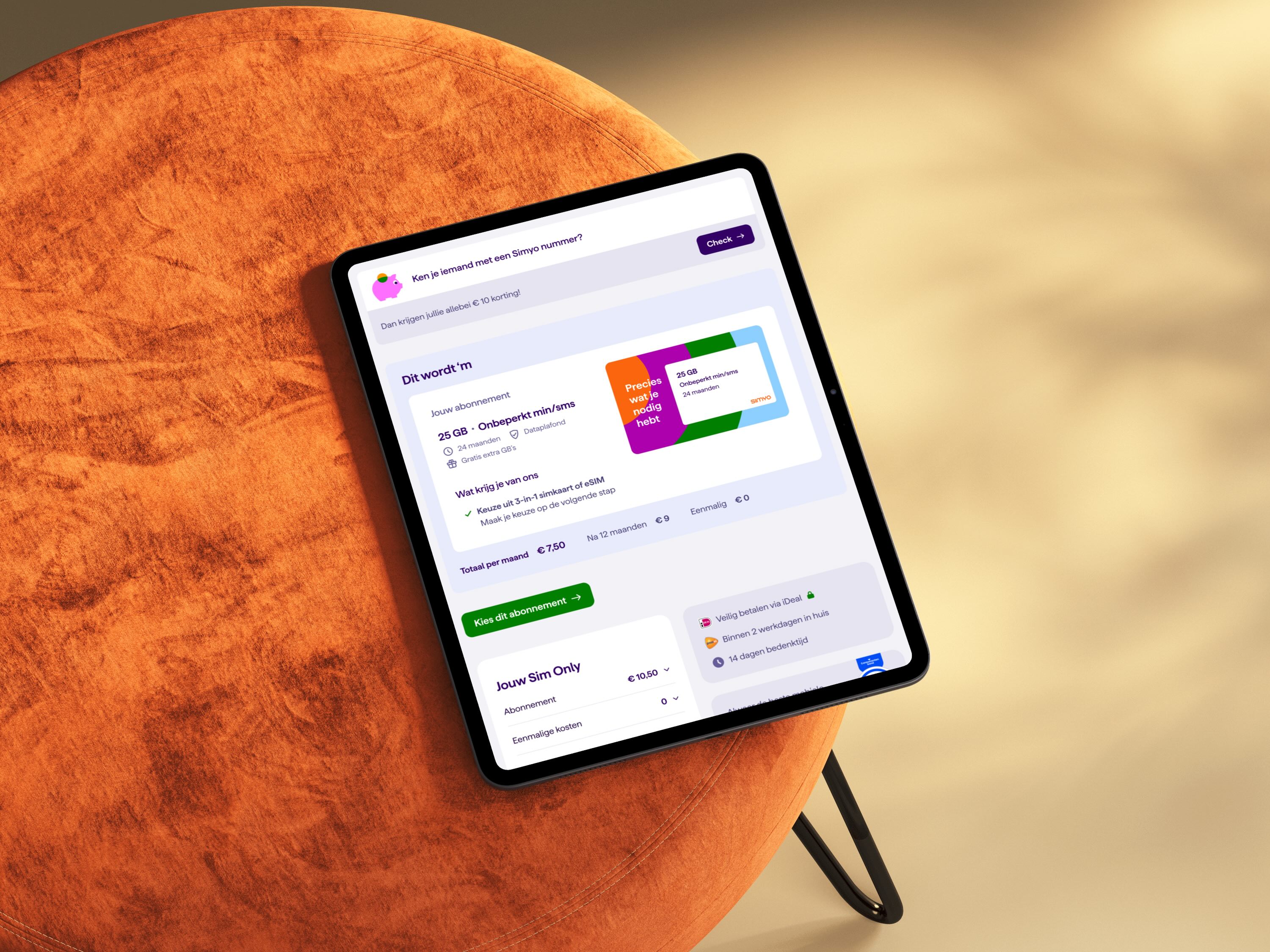
Over the course of the engagement, a continuous optimization practice was built and embedded at Simyo that operates at a high level of maturity. The process runs consistently, connecting research, design, experimentation, and implementation in a way that produces reliable, evidence-based improvements across both the website and the customer portal.
The impact shows up in multiple ways: in conversion rates, in reduced customer service load, in a cleaner and more navigable product, and in an organization that now has a shared language and a shared process for improving the experience on an ongoing basis. The work did not conclude with a deliverable. It concluded with a capability.
That is what makes this kind of engagement different from a project with a fixed scope. The value is not in any single solution. It is in the system built to keep finding and delivering better ones.