The path to effortless payment in public transportation
Introducing a new payment system while keeping it user-friendly
Client
OVpay
Services
Service Design

Summary
The OV-chipkaart had served Dutch public transport for nearly 20 years, but the technology had aged out. A new account-based back-end made it possible to shift the intelligence from the card to the system, opening the door to something far more accessible: traveling by debit card, credit card, phone, or smartwatch, with no separate transit card needed. That system is OVpay, now live across the Netherlands, processing at least 500,000 open loop trips per day, and awarded World's Best Smart Ticketing Programme at Transport Ticketing Global 2024 in London.
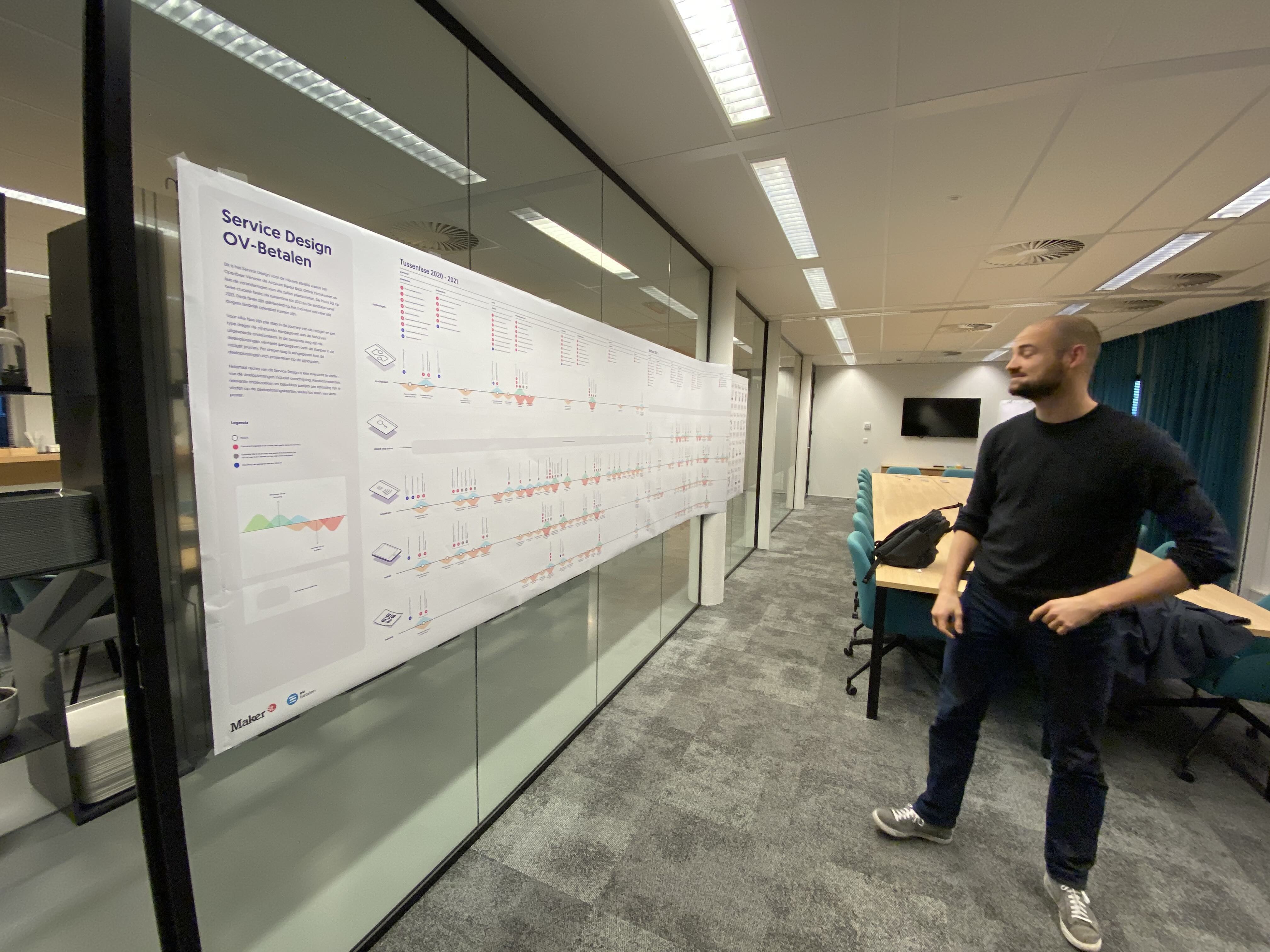
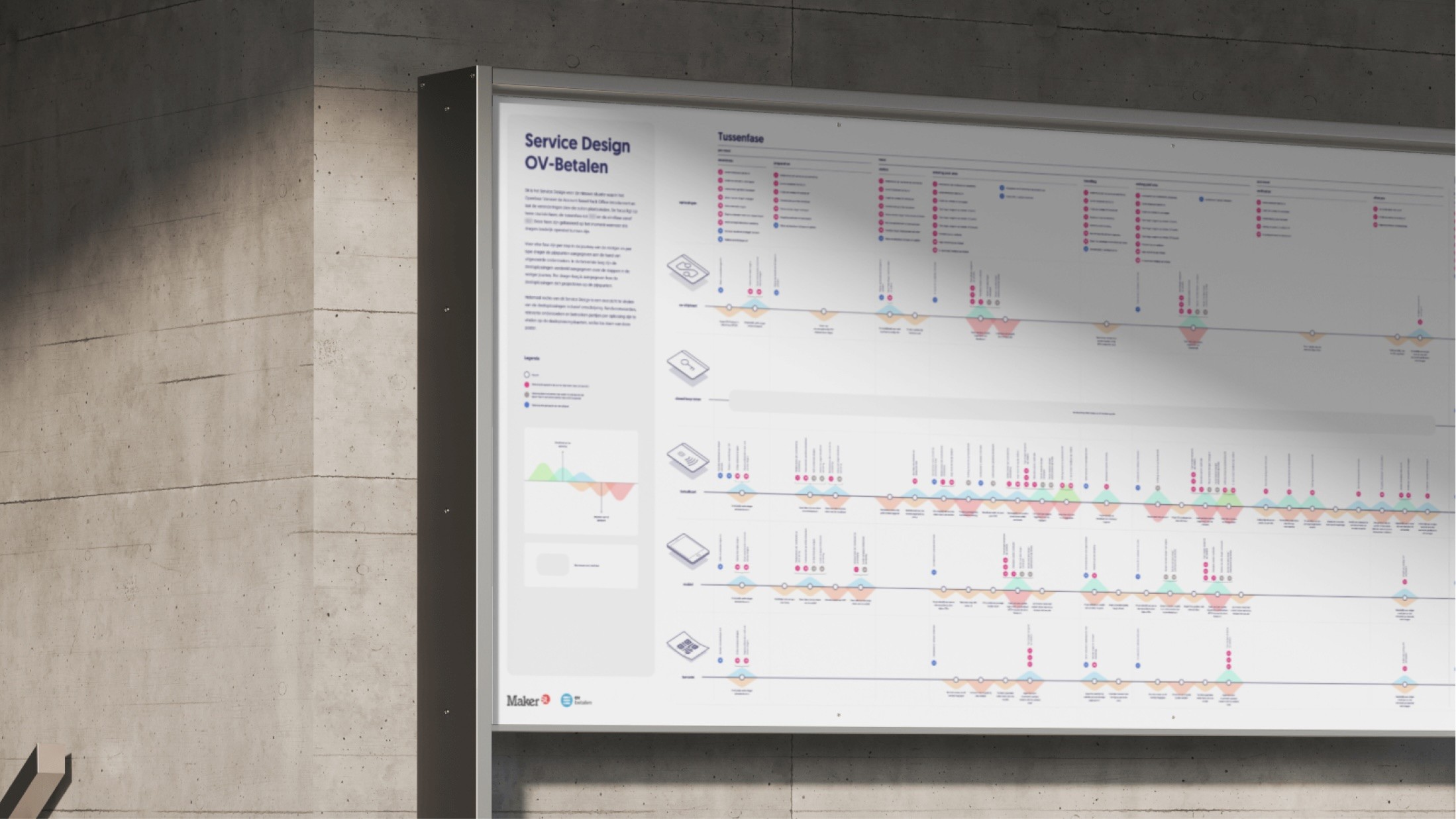
As one of two service designers responsible for the core service design strategy, the specific focus was on leading the research and experimentation strategy, with a team of four designers. That work included international benchmarking across transit systems in London, Seoul, and Tokyo, mapping the traveler journey across three rollout phases for every possible payment type, scoring pain points to prioritize solutions, and designing the principles for piloting and validating those solutions in a real-world living lab in Lelystad. Alongside this, a UX blueprint was developed for the central OVpay app, a service architecture was defined to govern what sits centrally versus per operator, and the check-in poles and gates were redesigned to handle multiple payment methods clearly and without added complexity. All of this was done in close collaboration with developers, marketeers, and proposition representatives from operators including NS and Transdev.
Challenge
Introducing a new payment system into the most heavily used infrastructure in the country is not a UX problem in the traditional sense. It is a systems problem, a trust problem, a communication problem, and a coordination problem, all at once.
The Dutch public transport landscape is a patchwork of independent operators: national rail, regional bus companies, urban tram and metro networks, and ferry services, each with its own operations, its own riders, and its own relationship with the check-in/check-out infrastructure. Translink sits at the center of this ecosystem as the shared back-end provider, but aligning every transport operator around a common traveler experience, during a live rollout, in parallel with an existing system that millions of people rely on daily, required a level of stakeholder coordination that goes far beyond a typical product launch.
At the same time, the transition posed a genuinely unfamiliar experience for travelers. The OV-chipkaart had trained an entire country to think in terms of a topped-up balance, a beep, and a visual confirmation on the reader. Switching to a bank card meant rethinking those mental models entirely: no balance to manage, no card to carry separately, but also new rules, new edge cases, and new risks for confusion, such as accidentally checking in with two cards at once, not knowing whether a check-in registered, or not understanding why the charge appeared on a bank statement the following day.
The challenge, then, was to introduce a new payment paradigm to millions of travelers across dozens of operators and channels, while keeping the experience feeling familiar, trustworthy, and inclusive.
Approach
OVpay is now live across the Netherlands. Travelers can check in and out on buses, trams, metros, and trains using a contactless debit or credit card, a mobile phone, or a wearable, with no registration required, no separate card to buy, and no balance to top up. The growth in adoption speaks for itself: the share of bank card check-ins rose from 33% in December 2023 to 41% in December 2024, and by late 2025 roughly a quarter of all journeys nationwide were made using open loop payment, with at least 500,000 such trips taken every single day. During Sail Amsterdam in August 2025, that figure crossed 50% for the duration of the event. The program won the World's Best Smart Ticketing Programme award at Transport Ticketing Global 2024 in London.
The rollout continues incrementally, with subscriptions and additional traveler profiles being added over time. Inclusivity remains a guiding principle: the service is designed to accommodate as wide a range of travelers as possible, from frequent commuters to occasional visitors to elderly riders navigating a new system for the first time.
The transition from a card-centric to an account-based paradigm is one of the most significant changes to Dutch public transport in a generation. The service design work done on this project did not just help introduce a new payment method; it helped an entire country learn a new way to travel.
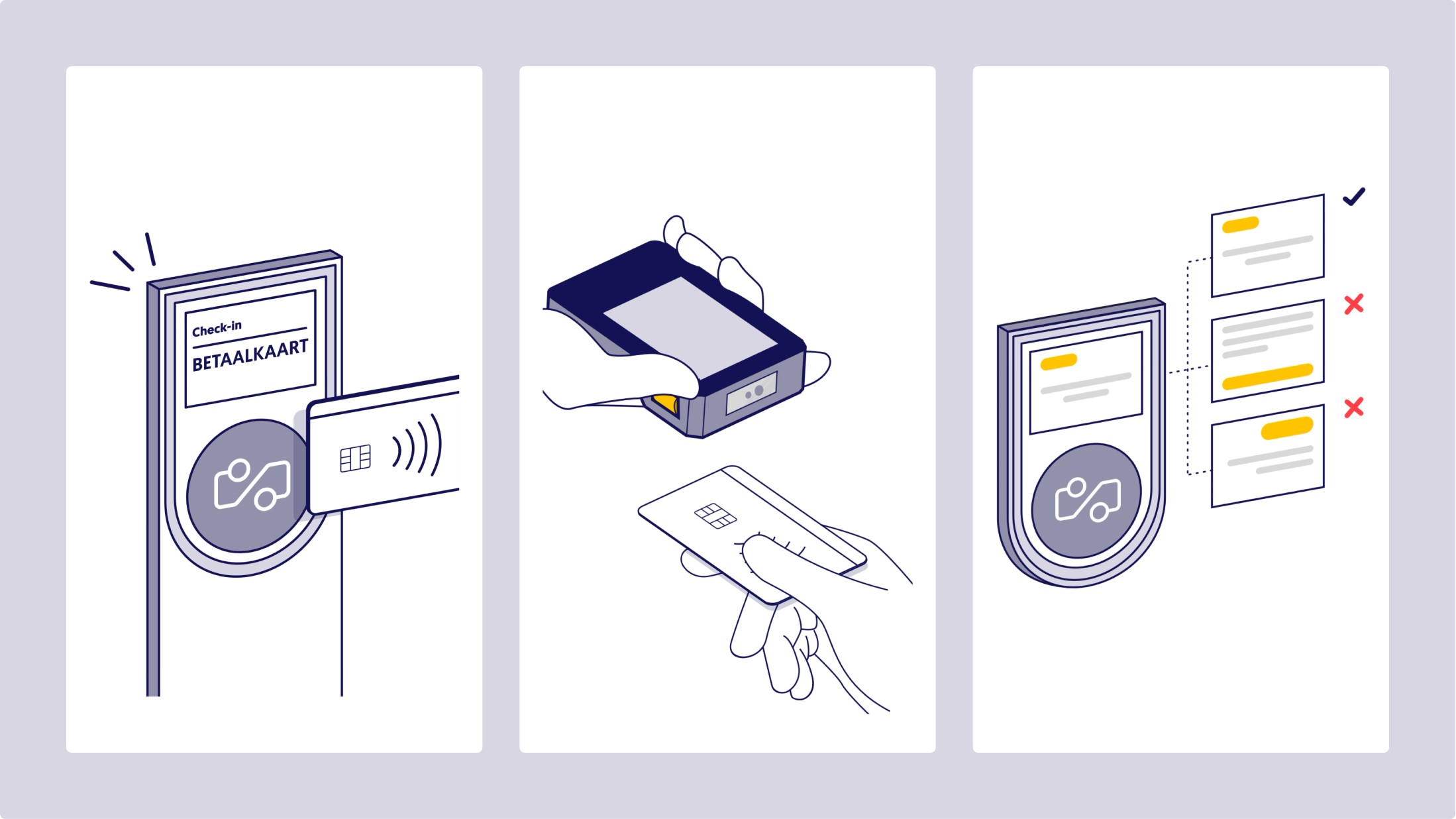
One example illustrates how consequential those conversations were. With the OV-chipkaart, every check-in reader displayed immediate visual confirmation of a successful check-in or check-out. Travelers had come to rely on that moment. In the new EMV-based system, that confirmation was not a given, it was an investment, and a costly one. Through thorough research and structured argumentation with stakeholders, the case was made that this feature was not optional. Removing it would have introduced a category of traveler anxiety that no amount of communication could fully address. The investment was made.
A set of experimentation principles was developed to guide how the team would validate solutions before rolling them out at scale. Rather than speculating about what would work, a living lab approach was established in Lelystad, a contained pilot city where new features and communication approaches could be tested in real conditions, with real travelers, and iterated on before broader deployment.
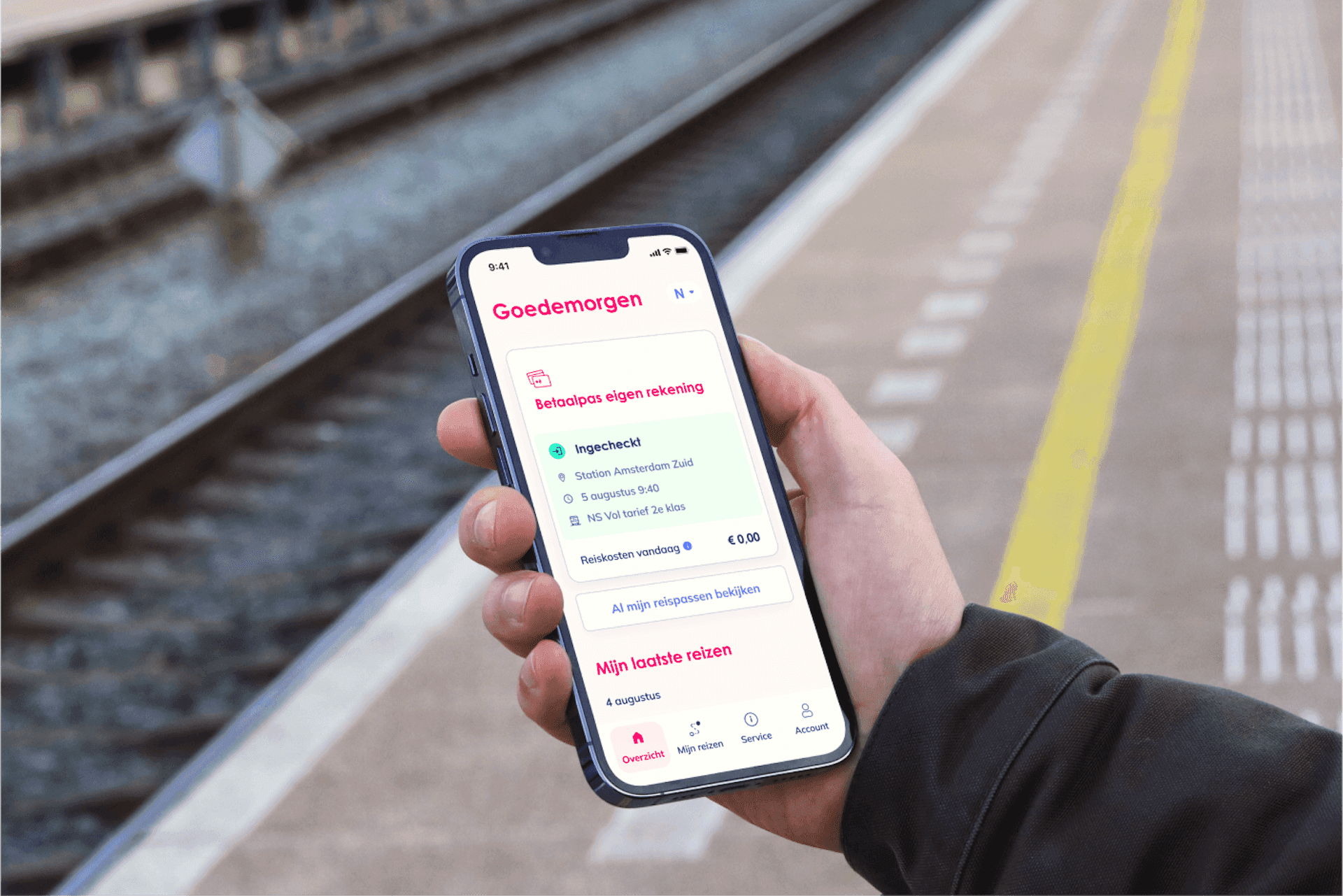
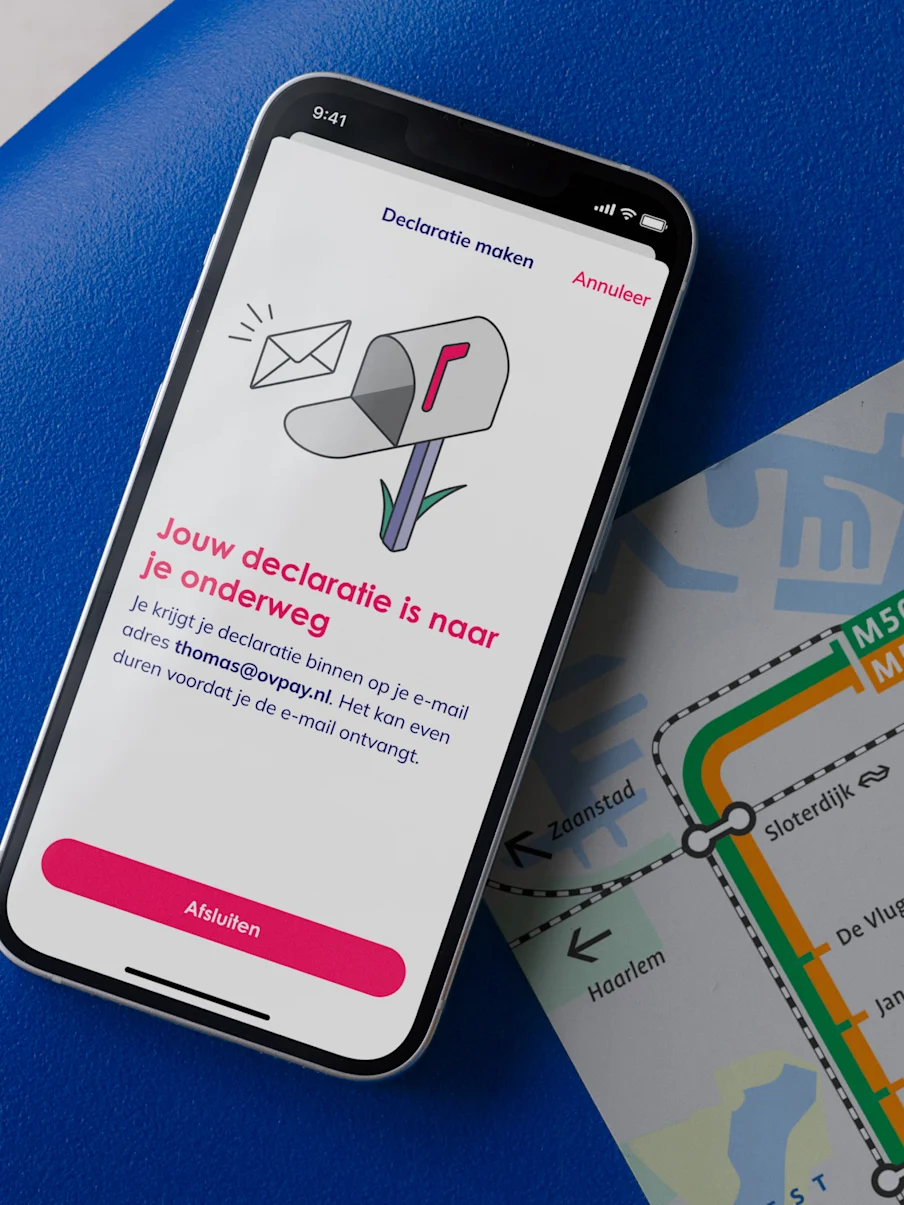
Alongside this, a UX blueprint was created for a central OVpay app, designed to handle the core needs of travelers within a broader ecosystem that also included apps from individual transport operators. The principles governing the split between what belongs centrally versus what belongs per-operator were codified in a Service Architecture, so that decisions about service placement could be made consistently, and so that travelers would always know where to go for what.
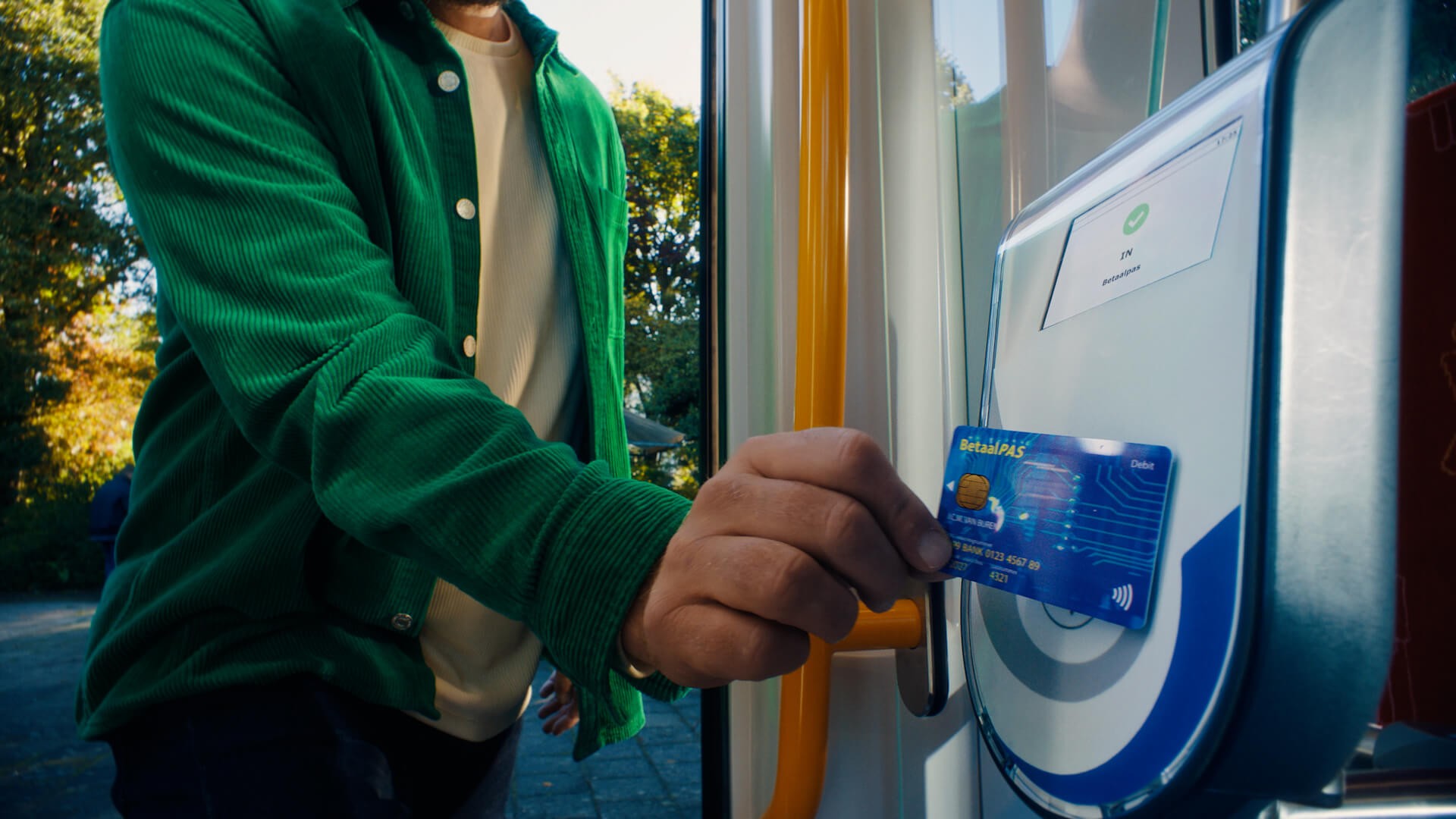
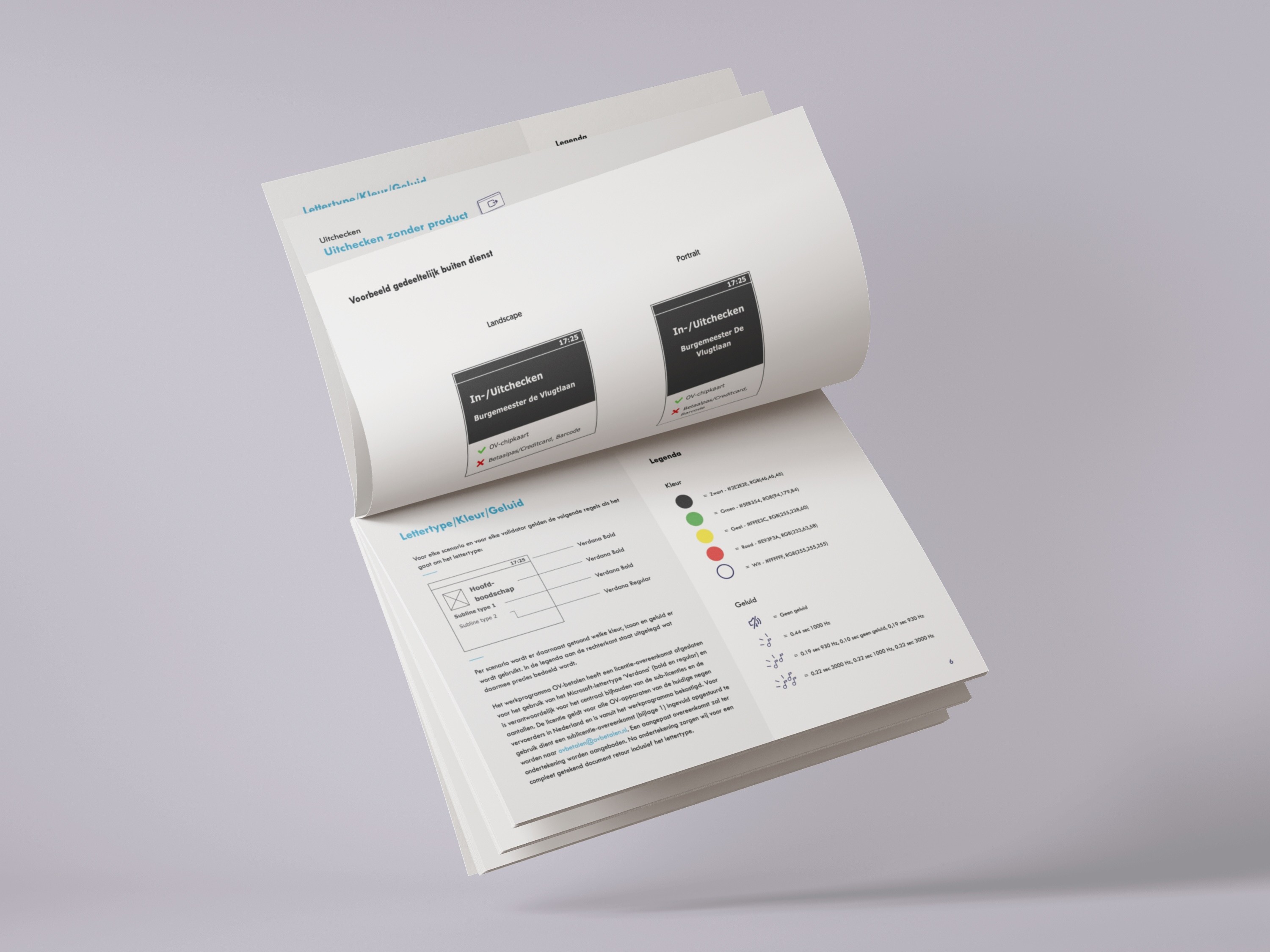
Finally, attention was given to the physical check-in infrastructure: the poles and gates at stops and stations. These touchpoints had to communicate more than ever before, since travelers were now arriving with different payment instruments and needed to understand their options at a glance. The information shown on readers was rethought to handle the new multi-payment context without adding cognitive load.
Outcome
OVpay is now live across the Netherlands. Travelers can check in and out on buses, trams, metros, and trains using a contactless debit or credit card, a mobile phone, or a wearable, with no registration required, no separate card to buy, and no balance to top up. In December 2023 alone, the system processed 22 million transactions. The program won the World's Best Smart Ticketing Programme award in 2024. The rollout continues incrementally, with subscriptions and additional traveler profiles being added over time. Inclusivity remains a guiding principle: the service is designed to accommodate as wide a range of travelers as possible, from frequent commuters to occasional visitors to elderly riders navigating a new system for the first time. The transition from a card-centric to an account-based paradigm is one of the most significant changes to Dutch public transport in a generation. The service design work done on this project did not just help introduce a new payment method; it helped an entire country learn a new way to travel.