Improving the passenger experience
Designing impact with thoughtful subtlety
Client
Schiphol
Services
Service Design
Summary
Schiphol handles tens of millions of passengers a year, and improving their experience is not a one-time project. It is an ongoing operational challenge inside one of Europe's most complex organizations. The airport knew that the way it was approaching passenger experience innovation needed to change, not just the experience itself. What was needed was a structured, repeatable method for identifying friction, designing solutions, and validating them in the real world before committing to change at scale.
Brought in to lead research and experimentation work, the role went beyond solving specific problems. The goal was to help Schiphol build a way of working: a model for continuous, evidence-based improvement that could be owned and carried forward by the organization itself. That meant conducting behavioral research on the ground, working closely with the Schiphol Passenger Experience team, security staff, and ground operators, designing and running a living lab inside a live departure hall, and using the results to prove the model worked. In a context that was complex, time-sensitive, and business-critical, that required as much stakeholder management and organizational thinking as it did design.
Challenge
Large airports do not change easily. Schiphol serves tens of millions of passengers a year across a tightly coordinated operation involving security services, ground operators, airlines, and a passenger experience team with its own priorities and processes. Any attempt to improve the traveler experience has to survive that complexity, which means ideas that cannot be tested safely, argued clearly, and measured objectively rarely make it past the conversation stage.
At the same time, the need for improvement was real and well understood. The security check and baggage reclaim consistently ranked among the most stressful points in the passenger journey, not because the infrastructure was failing, but because the human experience around it was underdesigned. Travelers were anxious, unclear on what to do, and often in each other's way. The gap between what was technically happening and what passengers were actually feeling was wide.
The core challenge was therefore twofold. First, to understand that gap well enough to close it. Second, and more importantly, to do so in a way that gave Schiphol a scalable, repeatable process for improving passenger experience going forward, rather than a handful of one-off solutions with no clear path to continued innovation.

Approach
The work began not with solutions, but with structure. Before any interventions were designed or tested, the focus was on establishing a process that Schiphol and the project team could follow together: a shared way of moving from observation to insight to validated concept. This became the backbone of everything that followed.
Within that structure, the first phase was immersive research. Time was spent on the floor of the departure halls, observing how different types of travelers moved through security, where hesitation and confusion arose, and what the emotional texture of the experience actually looked like in practice. It became clear early on that travelers are not a single group. A business traveler moving through security for the hundredth time has entirely different needs and behaviors from a family navigating it for the first time with two young children. Designing for one without the other was not an option.
Those observations, combined with direct conversations with passengers and staff, produced a layered picture of where the experience was breaking down and why. Pain points were mapped across the full journey, and the most significant friction moments were identified as the starting point for intervention.
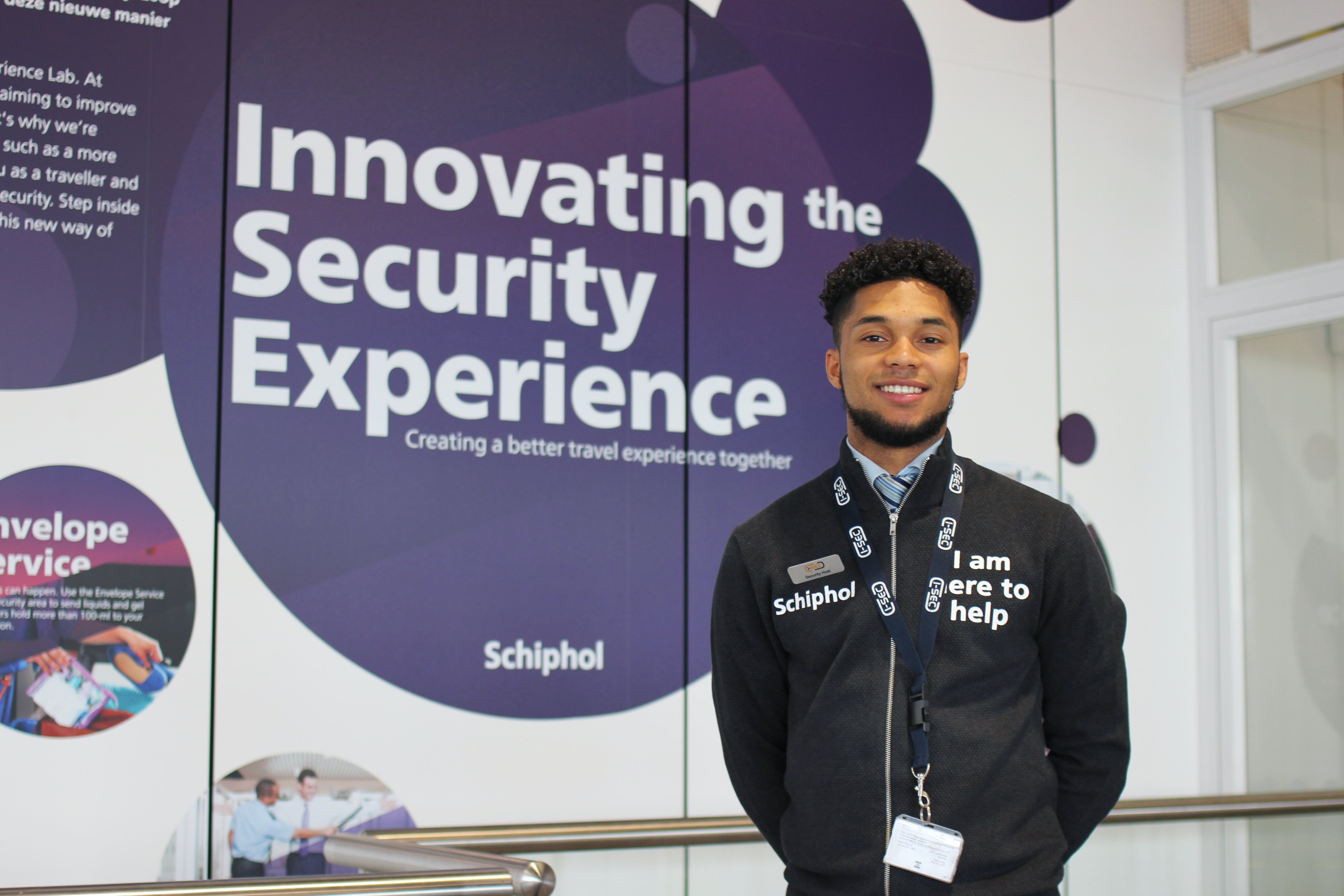
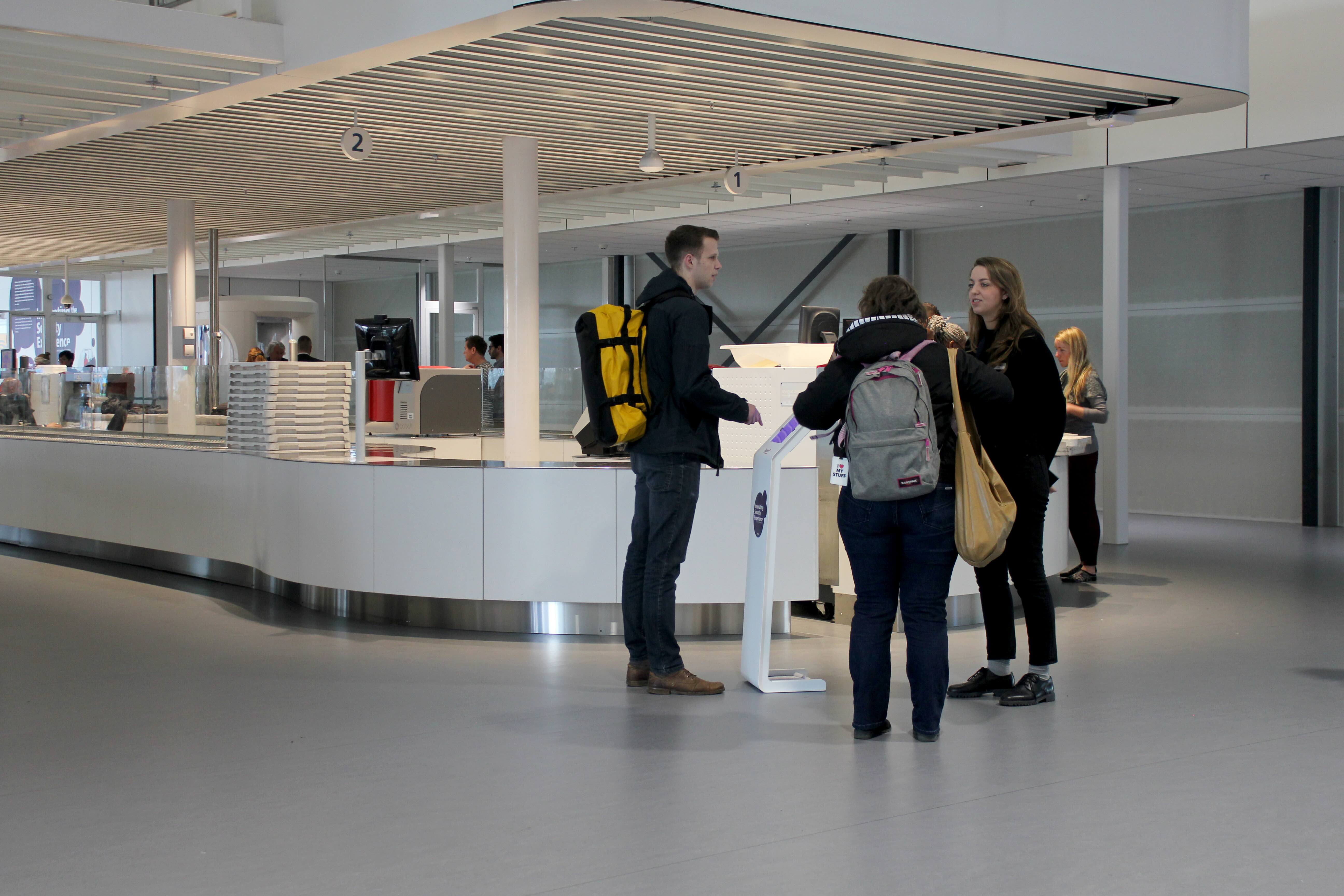
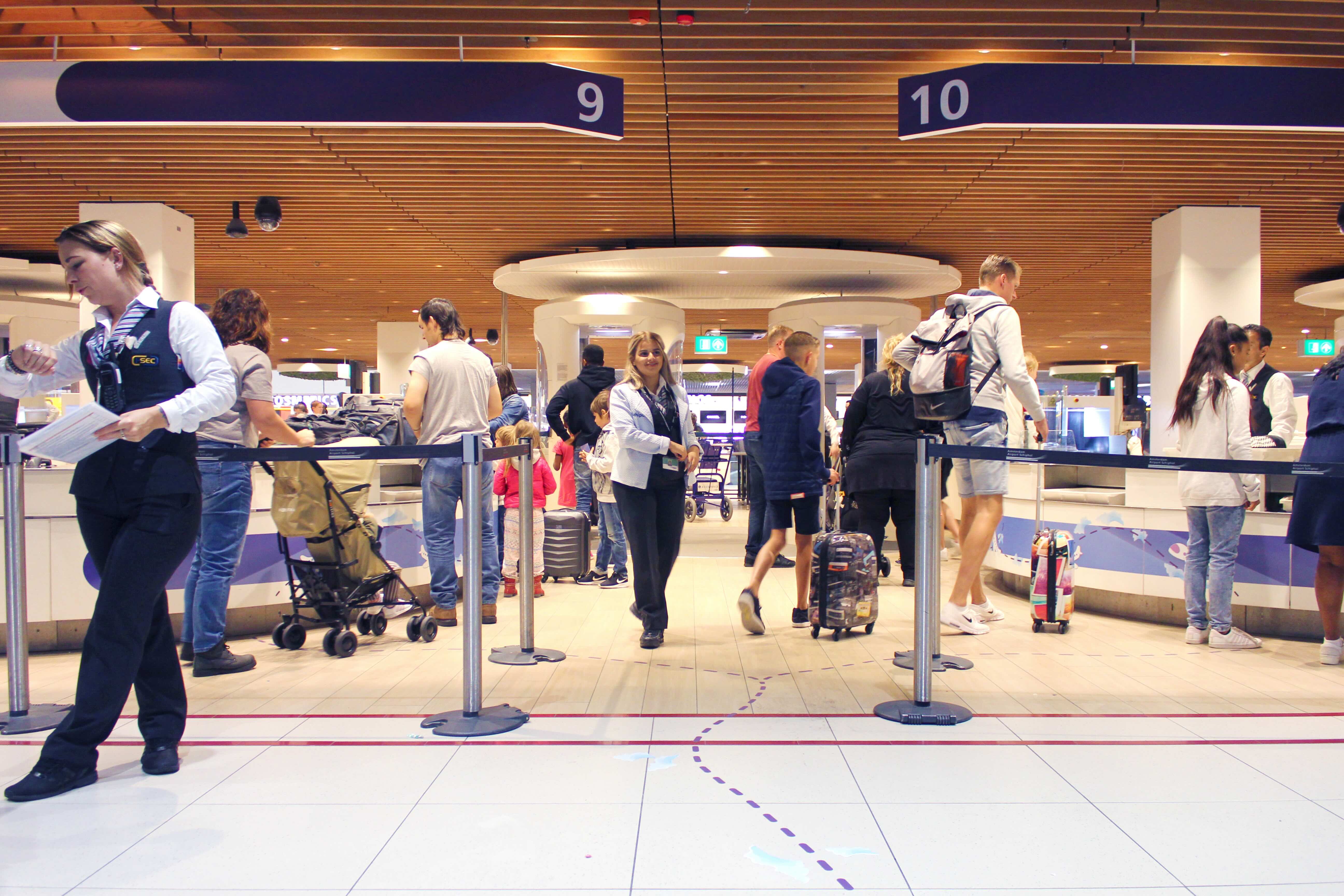
From there, a living lab was established inside one of Schiphol's departure halls. This was central to the approach: rather than presenting recommendations for Schiphol to implement later, solutions were designed, tested, and measured live, with real passengers, in real operational conditions. The living lab gave the team a controlled but authentic environment for running behavioral experiments, collecting feedback, and iterating quickly, all while the airport continued to function normally around it.
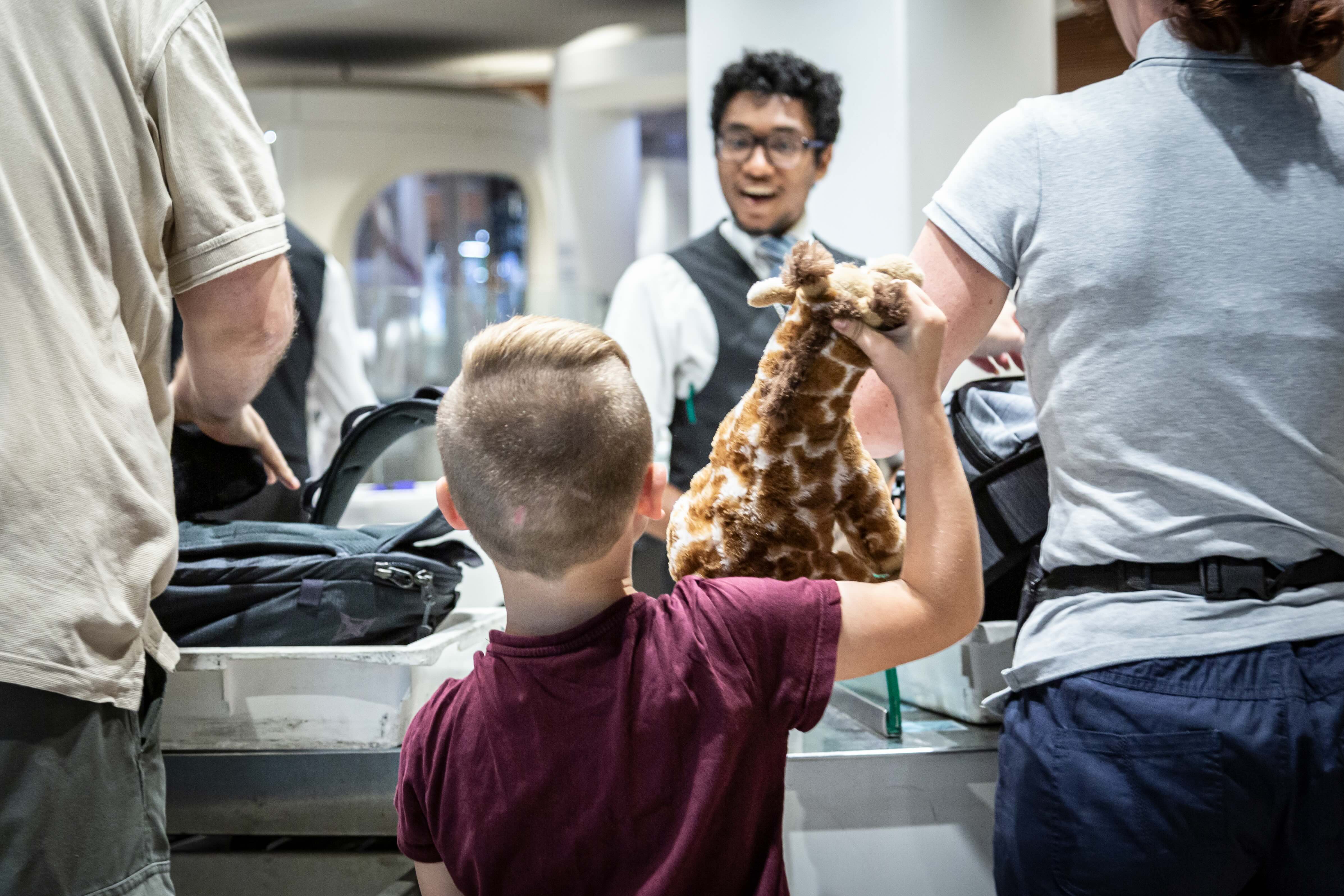
The experiments that came out of this process were deliberately concrete. A Security Assistant role was introduced, placing a dedicated person at the entrance to the security process to provide calm, personal guidance to passengers before they reached the checkpoint. The impact was immediate and measurable: passengers who received that brief human interaction moved through with more confidence and rated the experience significantly higher.
A Family Lane was introduced as a second intervention, giving families with young children a separate, more relaxed queue. The benefit was twofold. Families felt supported rather than rushed. Business travelers, no longer slowed by the unpredictability of traveling with small children, moved through more efficiently. A single, well-placed change improved the experience for two completely different traveler groups simultaneously.
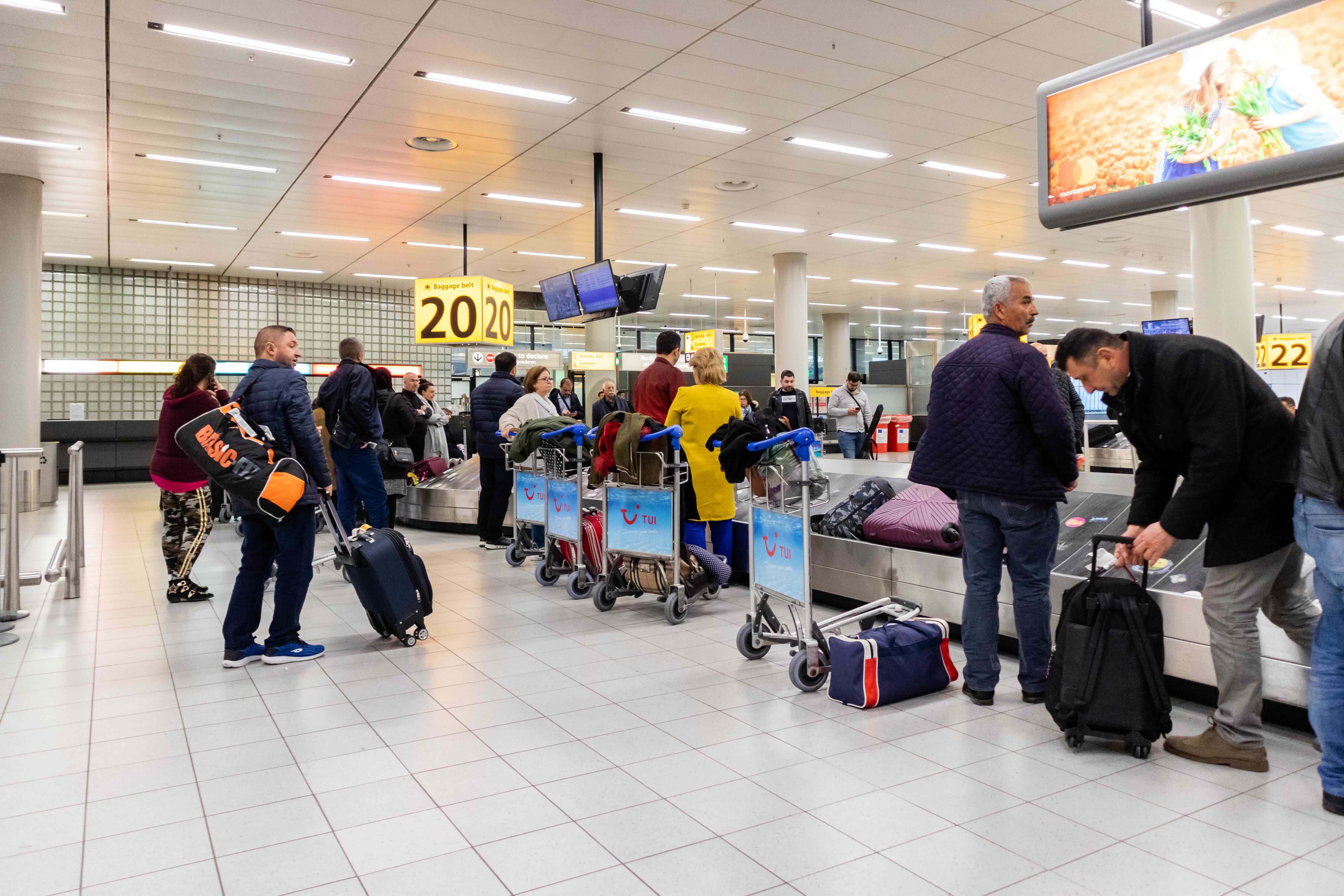
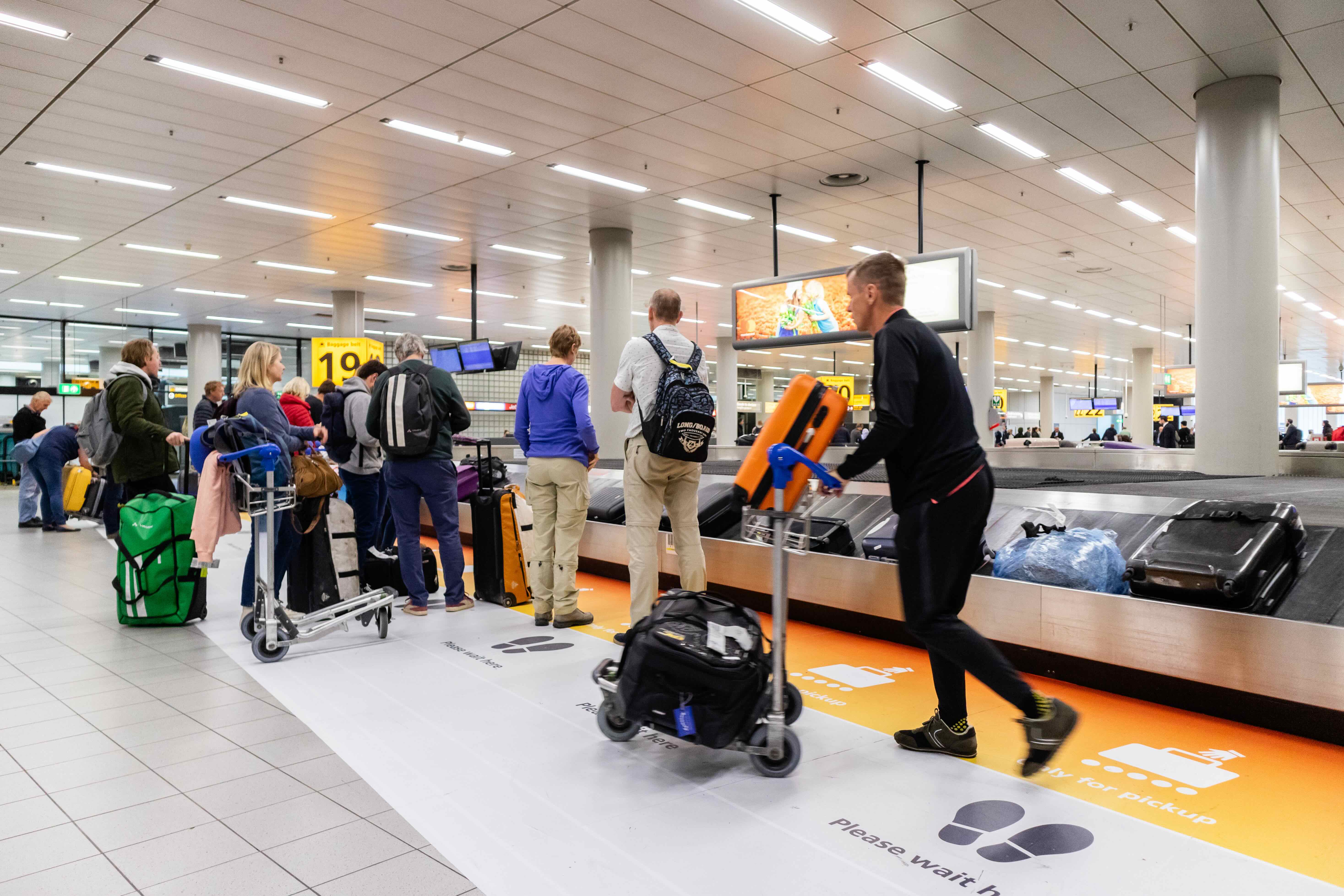
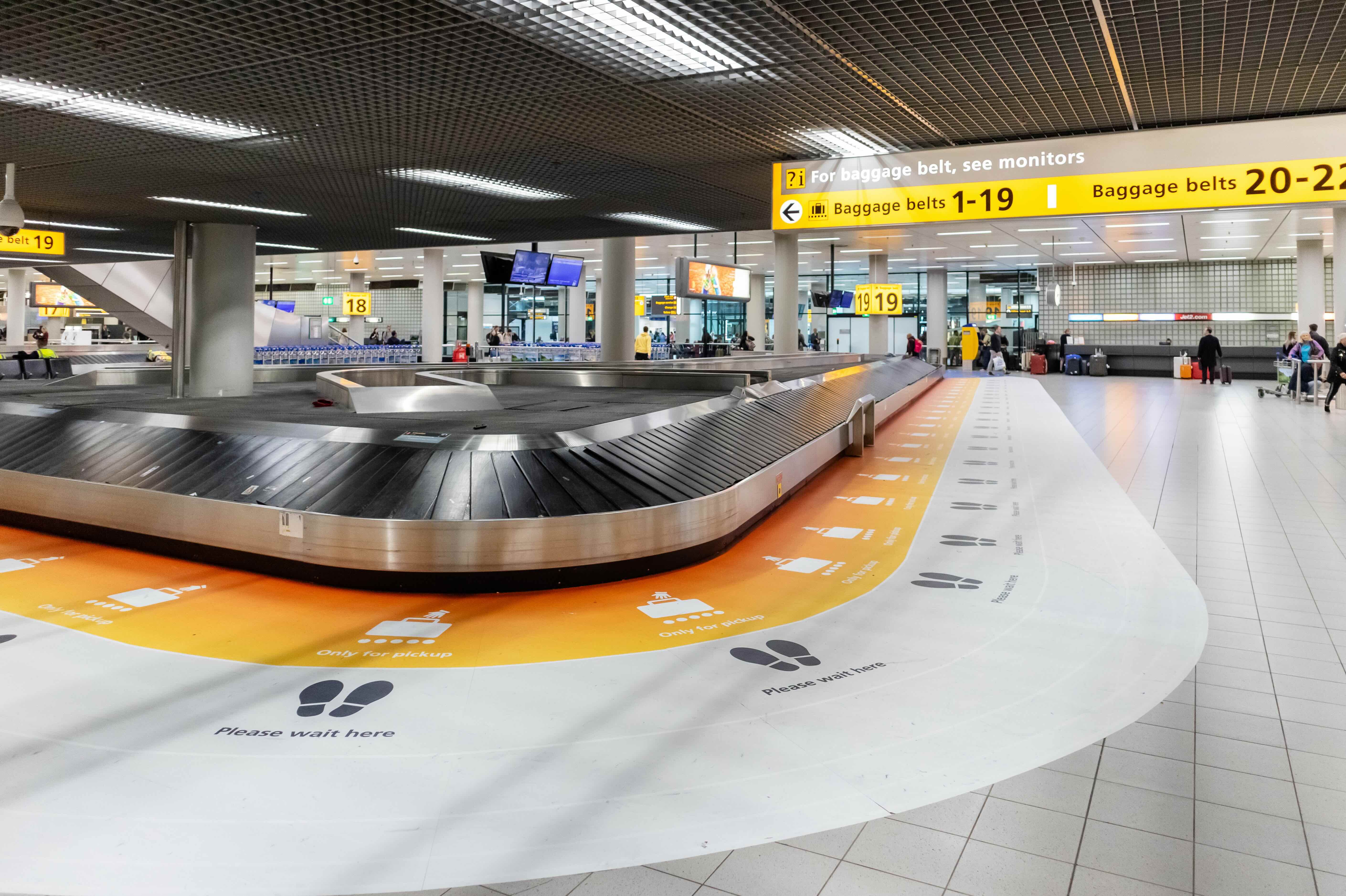
A third experiment addressed baggage reclaim through behavioral design. The frustration of waiting for luggage is compounded by the way people instinctively crowd the belt, blocking each other's view and access. Rather than signage or announcements, a custom floor treatment was designed: a wide graphic area around the belt that naturally encouraged people to stand back without instructing them to. Passengers gave themselves more space, could see their bags arriving, and collected them without the usual scramble. A small environmental nudge produced a measurably calmer end to the journey.
Each experiment was A/B tested under live conditions, with structured observation and traveler feedback collected throughout. None of them moved forward on instinct or assumption. Every recommendation was backed by evidence gathered in the field, and every step of the process was developed in close collaboration with the Schiphol Passenger Experience team so that the findings were immediately usable by the organization, not just by the external team that generated them.
Outcome
The project delivered on two levels. The immediate one was a set of validated, measurable improvements to the passenger experience at the security check and baggage reclaim, two of the most persistently difficult moments in the Schiphol journey. Schiphol moved forward with rolling out the validated concepts across a full departure filter in a broader pilot.
The more significant outcome was the model itself. By the end of the project, Schiphol had a structured, proven way of approaching passenger experience innovation: grounded in behavioral research, tested in real conditions, and designed to produce results that the organization could act on with confidence. That is the kind of outcome that outlasts any individual experiment.
What this project ultimately showed is something worth taking seriously in any complex service context: that meaningful improvement does not always require new technology or large-scale investment. Sometimes it requires a clear method, a willingness to observe carefully, and the patience to test small before scaling big.